How to plan the best flight route: A type A traveller’s step by step guide
If you’re Type A like me, booking flights actually requires quite a few steps. So in this post I’m sharing all of the things to consider when researching, choosing and booking flights, including some tips from my past experiences.
For context when you’re reading this, I live in Brisbane, Australia.
In this post we’ll cover:
- Tools for researching flights
- Things to check before booking flights
- Tips / my thought process for shorter flights versus long haul flights
- My preferred airlines (and why)
- Best and worst airports for a long haul layover
- Seat selection (can’t just pick any seat!)
Tools for researching flights
Notice I said tool for researching flights? Do not book flights through a 3rd party website! They charge a fee on top of the price the airline charges so you may as well just go direct to the airline’s website and book it through there.
I know a lot of people use Skyscanner and Google Flights but I prefer to use Webjet to research and compare flights. I like the format that they present the flights where I can see all the options in one screen, then hover over each for details of the layover times. You can also quickly filter by the fastest route and immediately cut out any route that requires more than 1 stop. It’s much faster to start with one of these 3rd party websites, than initially going to the individual airline websites.
It’s also helpful for domestic flights where multiple airlines offer very similar routes but sometimes at very different prices:

If you’re a visual person, the flight connections website is helpful to see how to get between places. This tool helps me discover more obscure routes I likely wouldn’t have known existed. It’s also especially helpful if you’re planning your first overseas trip to help you identify which are the ‘hub’ cities to fly in and out of.
You’ll still need to check the routes with the airlines directly and note that some of the routes are a seasonal and offered during the summer only.

Another similar website is flights from.

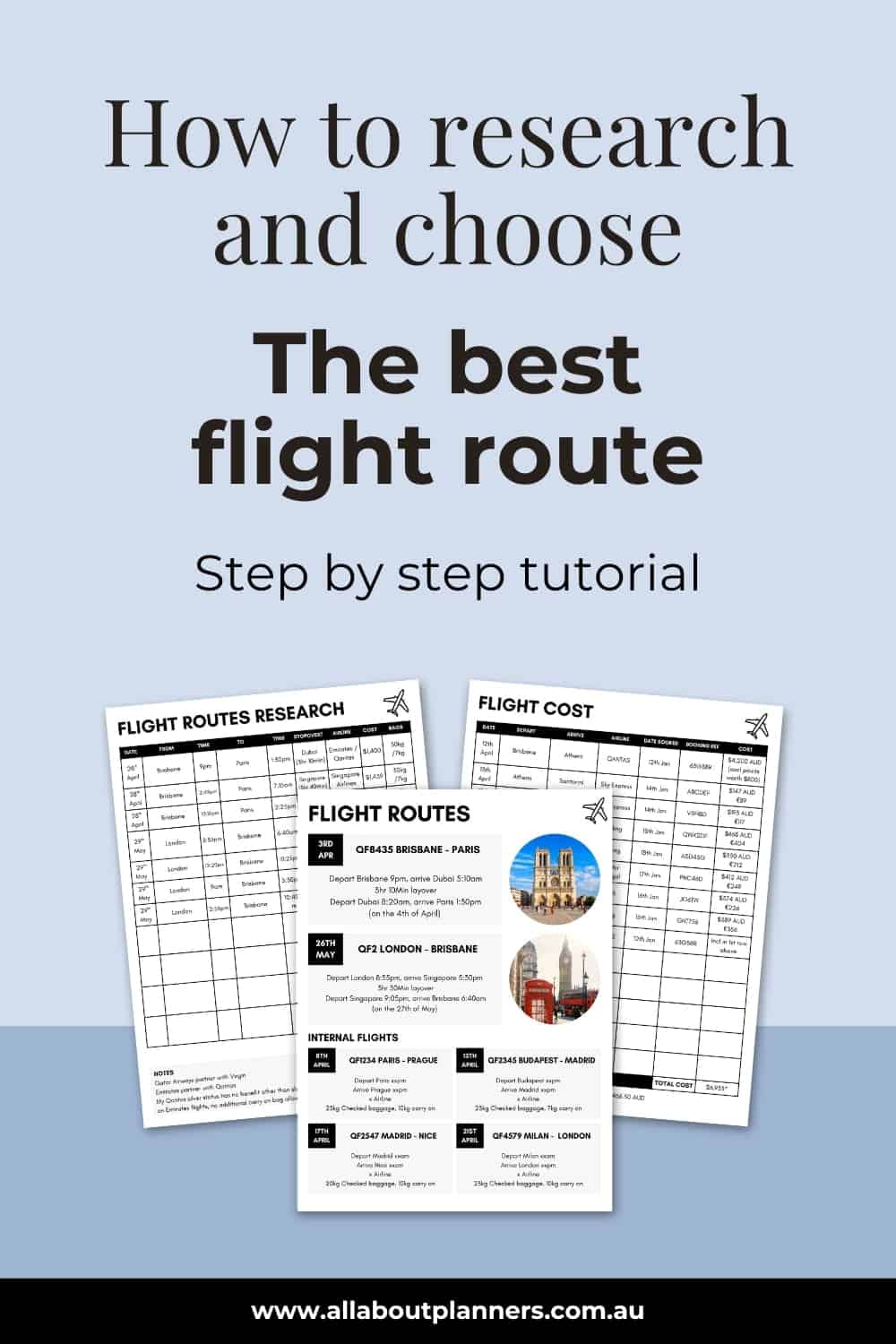
As I’m researching flights I track all of the options in the flight comparison tab of my travel planning spreadsheets.
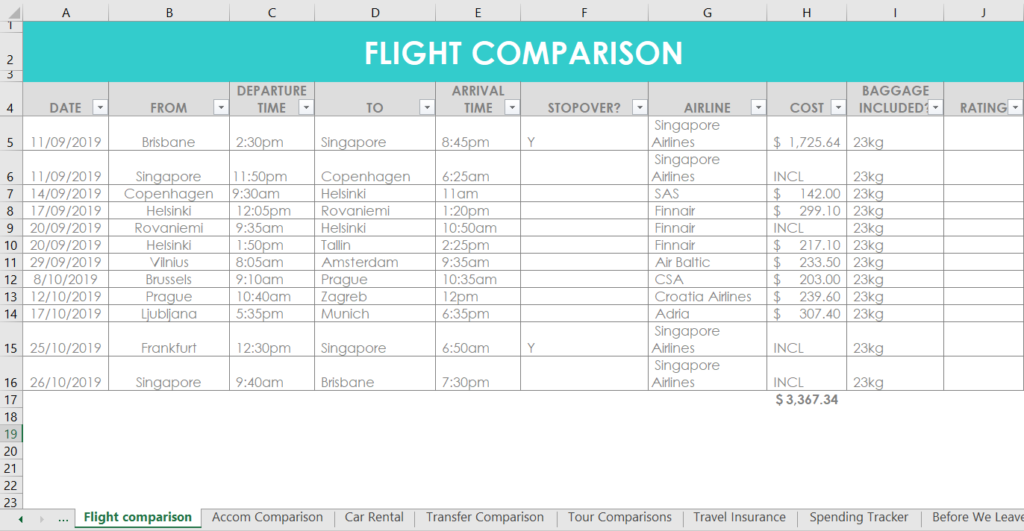
The Flight Comparison / Research tab of my Travel planning spreadsheets. More info in this post.
Things to check before booking flights
- The order of the destinations in the itinerary
- What time of day / night should you fly?
- Should you book a red eye?
- How many flights should you book in a row?
- Should you do a stopover?
- Things I consider when choosing shorter flights (the ones during the trip)
- How much layover time should you allow?
- What airports are the best for a long haul layover?
- Cost to book individual tickets, one way, return vs. round the world (RTW) tickets
I’ll go over my thought process for each of the above in more detail below.
The order of the destinations
When I’m putting together an itinerary I don’t visit the places I want to go in any order, there are a few things I consider:
- Entry and exit cities are my starting point
- Which cities have sufficient layover time to get me there and back to Australia? (I do not do more than 2 long hauls in a row)
- Which flights will land me at my starting destination mid afternoon? (so I can beat jetlag)
- Which entry and exit locations are cheapest to fly in and out of?
- What airlines operate the flights?
- Which entry and exit locations am I saving for future trips (helps to have roughly planned itineraries for future trips to certain places e.g. Europe and North America)
- If travelling to Europe, I try and avoid going in and out of the Schengen zone so I don’t waste time clearing customs multiple times
- Which cities or countries do I want to do a lot of shopping in? Internal flights are usually 23kg baggage limit whereas most long haul airlines give you a 30kg allowance
- Weather conditions – I typically travel during the shoulder seasons to avoid crowds and weather extremes (very hot summer months or very cold winter months). I still consider the fact that there is quite a difference in temperature between the start of October and the end of October
- Number of daylight hours – Note that in Europe, daylight savings means time goes back an hour towards the end of October (1 less daylight hour in the evening). Time and Date is a helpful website for checking this
- Any special events happening in the places I want to visit – I might be trying to time these (e.g. good chance of the northern lights), or avoid these (e.g. Oktoberfest)
Related post: 50 Things to consider when planning an itinerary
What time of day / night should you fly?
If it’s a shorter flight (e.g. domestic or between countries). I prefer flights departing around 9am so I don’t have to get up too early and have a bad nights sleep worrying about missing an alarm. Plus I arrive at my destination mid afternoon, get access to the hotel room and drop suitcases off, then do some exploring before dinner. Both the departing destination and the arrival destination should have public transport operating and ubers or taxi as backups. If I took a flight late in the day it doesn’t leave enough contingency – weather delays, cancelled flights, missed connection (if a connection is required). I’d rather not risk it!
For long hauls, I like to fly out late at night (depart 9pm). That way I can work that day (don’t have to waste annual leave), have time to pack and then by the time I get on the flight I only need to stay awake for the meal then I’m usually ready to crash anyway.
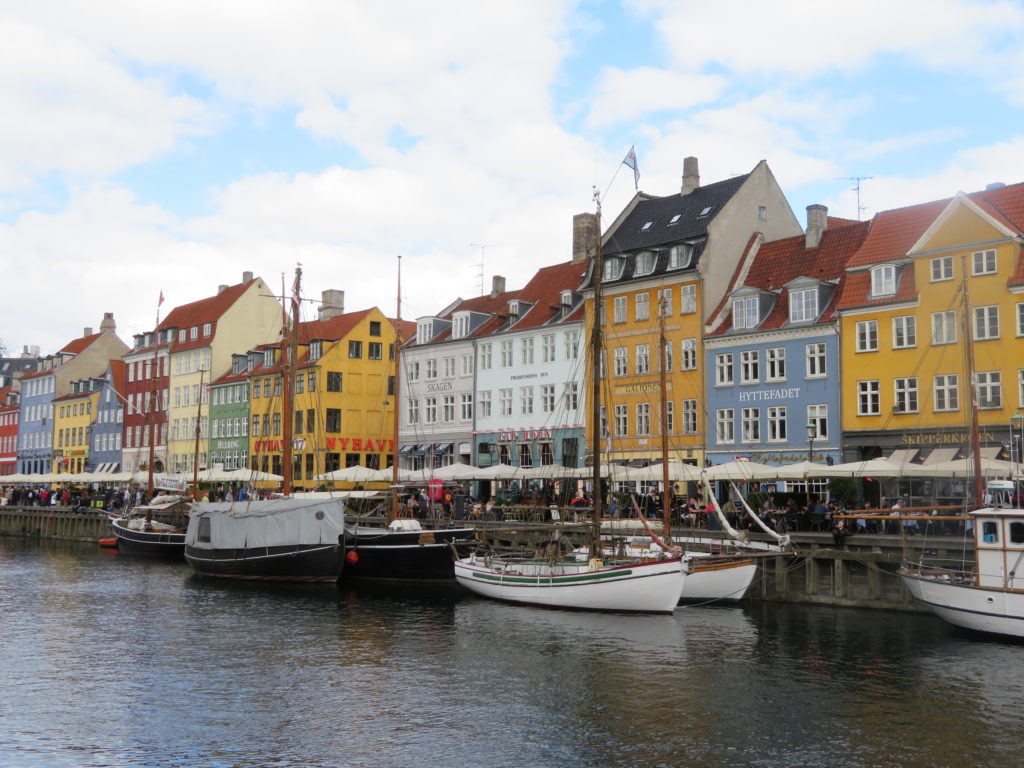
Copenhagen is a good starting city, you can get from the airport to the city centre in under 30 minutes
Should you book a red eye?
So this one really depends where you live in the world. If you’re in Australia, New Zealand or somewhere else in the southern hemisphere and you’re trying to get to the northern hemisphere (or visa versa) there’s absolutely no way to avoid a red eye flight.
I prefer to book flights departing Brisbane (where I live) at 9pm (that’s when the Emirates flight to Dubai always leaves). By the time you add in a 3-4 hour stopover, you’ll arrive in Europe sometime around mid afternoon. Then by the time you go through immigration, get from the airport to your hotel, you only have to stay awake for a few hours, have some dinner and then it’s time to go to bed. I wake up the next morning with my body clock reset to the new time zone – no jetlag with this method.
If you book a flight leaving Brisbane mid afternoon (which is when the Singapore Airlines flight to Singapore usually leaves), then add in the stopover and you’ll arrive in Europe around 6 – 7am. You then have to stay awake the whole day feeling a bit crap, looking like crap (as most hotel check in doesn’t open until 2/3pm) before you can go to bed. But the flipside is that at least you can sleep in before you board the first flight.
If you’re heading to the USA, those flights tend to leave Brisbane mid-morning (10am-ish). So you’ll have to get up early, you likely won’t sleep on the flight, and then you’ll land early in the morning and have to stay awake for the whole day.
I’ve tried all of these options and the one I prefer is the red eye leaving at 9pm.
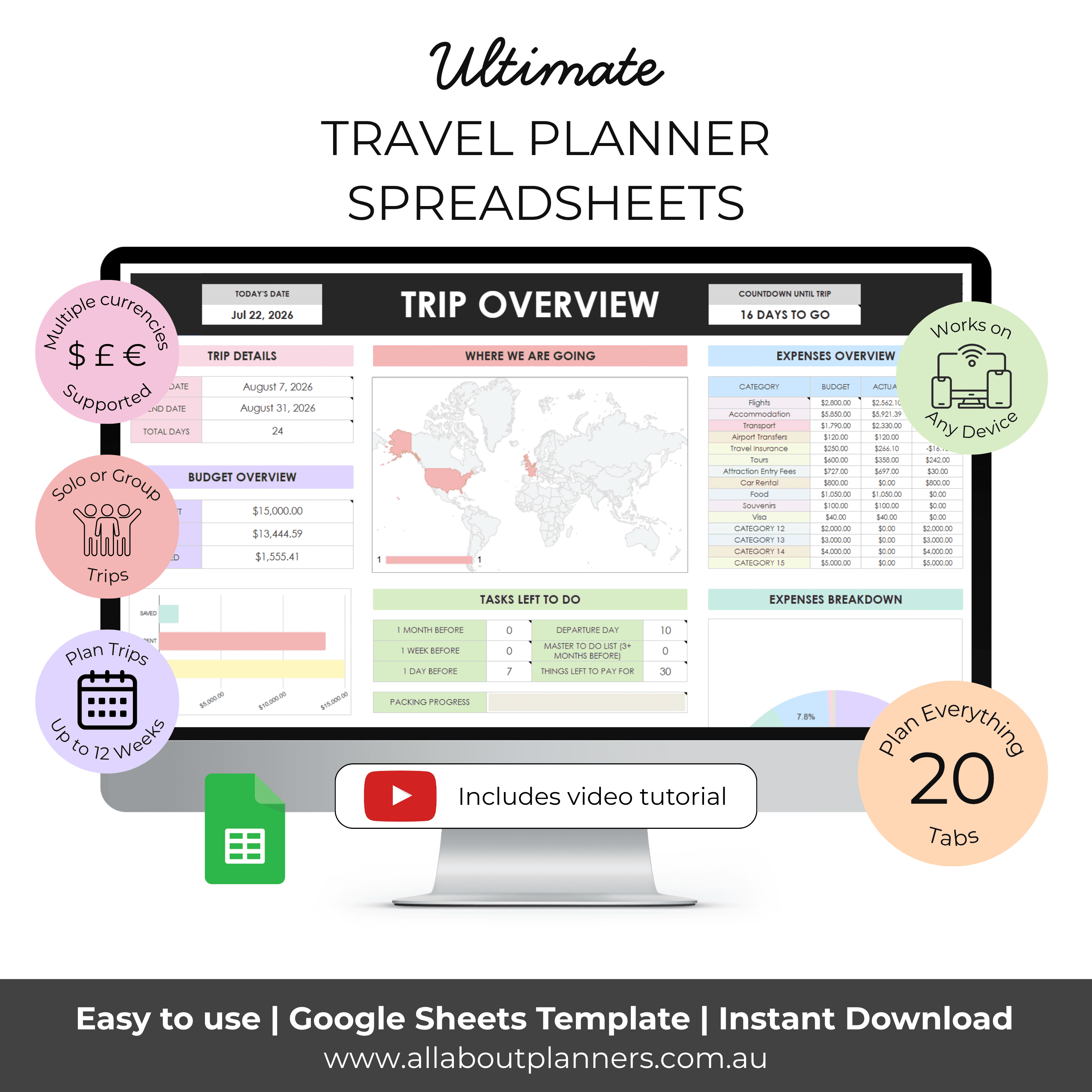
Research and compare different flight routes and cost with my travel planning spreadsheets
— Long haul flights & Airports —
How many flights should you book in a row?
I will do no more than 2 long haul flights in a row.
Some of the long haul flight routes I’ve flown over the years:
- Brisbane – Auckland – San Francisco
- Orlando – Los Angeles – Brisbane
- Brisbane – Singapore – London
- Zurich – Singapore – Brisbane
- Brisbane – Vancouver – Las Vegas
- Vancouver – Brisbane
- Brisbane – Singapore – Copenhagen
- Frankfurt – Singapore – Brisbane
- Brisbane – Dubai – Paris
- London – Dubai – Brisbane
- Brisbane – Dubai – Milan
- Budapest – Dubai
- Dubai – Brisbane
- Venice – Dubai – Brisbane
- Brisbane – Dubai – Prague
- Venice – Singapore
- Singapore – Brisbane
- Brisbane – Tokyo
Where the flight route was not direct, the layover time was between 3 and 5.5hrs.
Which airports are best for transiting through?
Of the flight routes I’ve listed above, Singapore is my favorite airport to transit through. It’s easy to navigate, clean and well organized.
If you’re transiting but have a longer stopover you can visit the Jewel (you must clear immigration to visit, and I’d allow 2-3 hours to look around, in addition to time required to find your gate).
When I flew out of there and used the early check in counters so I could have a look at the Jewel, it was self serve counters so no one was there to weigh my carry on bag when I checked in 🙂
There’s more reasons about why I prefer to transit through Changi airport later in this post.

Auckland airport is easy to navigate but out of the way unless you’re on the east coast of Australia wanting to go to the USA.
I wouldn’t recommend Dubai airport for first time travelers if you can avoid it, it’s very overwhelming and I nearly missed my flight to Paris the first time I transited through there. Not because I didn’t allow enough layover, but because it’s a silent airport, they only open the gate shortly before boarding and people hanging around the gates likely aren’t actually on your flight. They’re just sitting there because there’s nowhere else to sit. Some of the gates have escalators where the waiting area is downstairs and actually not even visible from the gate. It’s ok once you go through there a few times and know what to expect, but to me it’s always feels like a shopping mall with an airport attached, when it should really be the other way around.

Vancouver airport is easy to navigate but time consuming to queue and transit through if your connecting flight is into the USA. Clearing customs happens before you enter into the USA so factor that into your layover time in Vancouver.
Many of the larger European airports that have international flights, have self service bag drop. Since nobody (or very few staff) are manning the bag drop, I’ve never had my carry on bag weighed leaving any of the European cities I listed above.
How much layover time should you allow?
If you google the airline or the airport, it will usually tell you how much time you should allow. But I try and add an extra hour. A good rule of thumb is minimum 3 hours for a long haul layover. This gives:
- 1 hour in case your incoming flight is delayed
- 1 hour to go through security and walk (or sometimes get a train to another terminal) to get to your gate
- Then boarding usually starts 1 hour before the next flight leaves
Sometimes you’ll have to get on a bus that will drive you out to the plane. Even in an airport as large as Dubai I’ve had to do this a few times. Sometimes you’re on the bus for 20 minutes before you get to the plane!

I wouldn’t book either of these flights. The layover time is not long enough for either flight
The exception to the above is a flight route I have booked for my upcoming trip to Norway. The majority of flights up to northern Norway only have 30 – 45 minute connections which doesn’t seem like enough. I spent ages in Facebook groups and forums before finally just contacting the airline. They assured me that it is but I’m quite nervous about it!

What airports are the best for a long haul layover?
Singapore Changi Airport
This is my favorite airport to transit through on the way to Europe. The terminal walkways are wide and straight with moving walkways, so if you ever had to run it makes it much easier to see where you’re going and to find your gate. Everything is very clean and there are plenty of bathrooms (which are also clean).
There are multiple terminals but every time I’ve transited through there, the arrival and departure flights have left from the same terminal. When I flew London – Singapore – Brisbane, there were staff waiting with signs to direct all the Aussies to the Sydney, Melbourne, Perth and Brisbane flights. The transfer was super easy!
This airport has showers in some of the lounges that you can pay for a shower without having to pay the higher fee to access the rest of the lounge.

If I have to run to make a connection, I’d rather do it at Changi airport

What airports are the worst for a long haul layover?
Los Angeles Airport (LAX)
I transited through LAX back in 2014 and it was awful back then. There was a change in fight that meant a 4 hour layover turned into a 12 hour layover with the flight leaving at midnight. After we went through security, we were stuck at this tiny part of the airport that you could see from one end to the other with only a few gates and a few snack food type shops to keep us entertained for 12 hours.
They’ve since renovated the airport and I had to transit through there again in 2024 when I was going home from Chicago to Brisbane. To change terminals, it took an hour of winding through corridors, up and down escalators and not really knowing if we were heading in the right direction until we finally got to the right terminal.
Dubai Airport
I hate Dubai Airport.
Terminal A (the oldest terminal) is the absolute worst. Depending where your incoming flight lands, you may have to get on a train to switch terminals, you’ll have to go through security again and there can be far distances to walk.
In contrast, another time I landed in terminal C and my next flight was been departing from Terminal C. The gate was the gate exactly at the entrance so all up it took only half an hour from landing to go through security and get to my next gate.
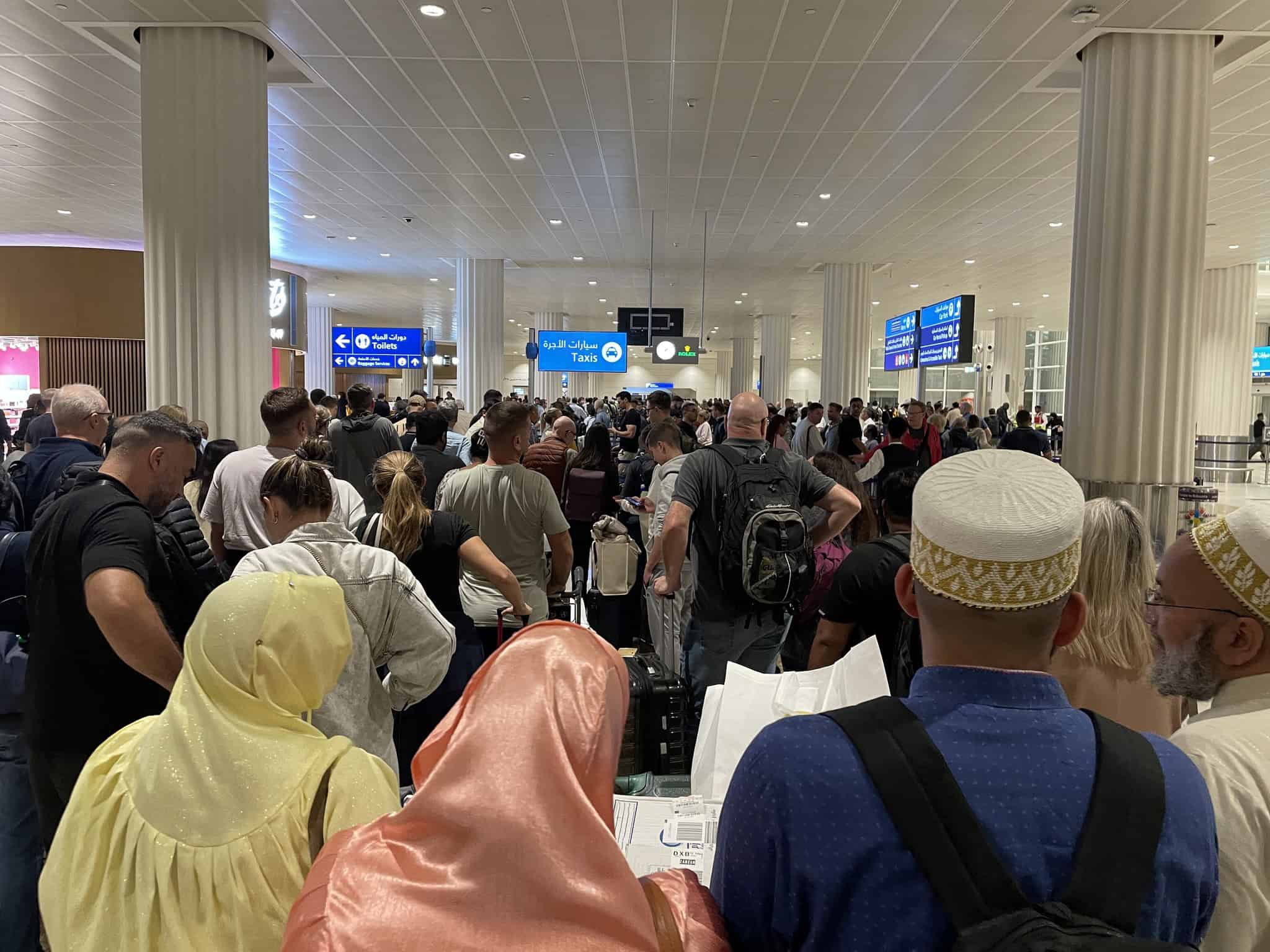
I must admit though, if you’re actually staying in Dubai, it’s an easy airport to get out of (and to find your way to check in / bag drop when you’re ready to leave). This was the taxi queue at 1am and it only took about 20 minutes to get through. There were multiple lanes of taxis waiting. It looks like chaos but it was actually quite well organized.
Should you do a stopover?
I’ll only do a stopover if it works for my itinerary, and it’s the right time of year. I did a 2 day stopover in Dubai in November, as that is the start of their winter. It was still hot with that dry heat making the temperature feel ever hotter. I also did a 2 day stopover in Singapore in August, it was humid but not uncomfortable. Be sure to check the weather conditions so you know what you’re in for!
Some airlines used to offer partner deals with heavily discounted hotel deals but they don’t seem to be as common anymore. The deals offered by Qatar airways look good.

Qatar Airways appear to still be offering some good stopover deals
What airport does the flight depart from?
Some of the big cities (especially in Europe) have multiple airports so always check! On one of my Europe trips I went to the completely wrong airport in Milan, then did a mad dash in a cab across the city and made it to bag drop 7 minutes before it closed (the cab driver definitely sped so we made it in time, he earned his tip!)
Cities with plenty of flight options in / out of Europe
- London
- Paris
- Amsterdam
- Frankfurt
- Zurich
- Rome
- Barcelona
- Athens
- Budapest
- Copenhagen
- Norway
- Milan
- Warsaw
Cities with plenty of flight options in / out of North America & Canada
- Vancouver
- Los Angeles
- Dallas
- New York
- Washington
- Altana
- Orlando
And I’m sure many more!
Shorter flights during the trip
For flights within a country (or within Europe), since these are usually no more than 3 hours, I try and book a flight departing around 9am or 10am. That way I don’t have to get up too early, but I also don’t waste the entire day in transit.
I avoid flights that land after 7pm, because by the time you get your bag and get to your accommodation, restaurants could be closed. Some accommodation doesn’t have late night check in, and I can’t sleep if I’m hungry!
I also try and avoid booking the last flight of the day because if it’s unexpectedly cancelled – that could cost me half of the next day. You’d think you’d be able to get on to the next flight, but what if that flight is full?
I always try and book the first flight out of the day in cold climates, so I have a buffer in case something goes wrong and there are delays due to weather or flight cancellations. Then I have the rest of the day to find a backup option and potentially avoid paying for another night’s accommodation and losing precious time that could be spent sightseeing.

Arriving in Toronto in the middle of January
–Booking the flights–
Use a private browser window
First things first before you do any research for flights, make sure you open a new private browser window in Chrome, Firefox or whatever you’re using. Otherwise websites can use cookies to track your search history, and you might find when you come back a few days later that the price has jumped for no reason.
Book with the airline direct versus using a 3rd party or travel agent
I never use a 3rd party to book flights and I’ve only used a travel agent a handful of times 7+ years ago. You don’t need a travel agent! Just go straight to the airlines website and book the flight directly. It’s usually cheaper (as no commission to the 3rd party), there’s no chance of the booking going missing, and if sometimes awful happens (like covid), you don’t need to argue with a 3rd party to get a refund.
From my personal experience the few times I used them, I found some travel agents to be people that just want a ‘fun’ career and haven’t traveled much themselves. So they’re advice is very limited. Also remember that travel agents will try and steer you to their travel partners – so you might end up in a chain hotel in a less desirable location outside of the city centre, and actually pay more for it, than if you just book an independent hotel, or book the hotel, airport transfers, tours etc. yourself.
How far in advance should you book?
As soon as you are certain on your travel dates! The Flight prices tend to increase the sooner it gets to the departure date but I have seen some pretty good deals when booking 3 months or less. I booked one trip in January for travel in April / May and the flights were the same price as another trip that I’d booked 6 months in advance.
When I did my spontaneous Europe trip (booked everything including the flights less than a week before leaving), the flight price was cheaper than past trips I’d booked months in advance. BUT it does depend where you’re flying in and out of, the airline you’re flying with and the dates you’re flying.
Some airlines offer sale and saver type fares but usually only for a limited time. This is why it’s important to have your itinerary planned so you’re organized and know your dates to take advantage of sale fares!
Booking one way tickets versus return versus multi-city / round the world (RTW) tickets
Using the flights I’m taking for my next trip to Europe as an example, let’s compare the cost:
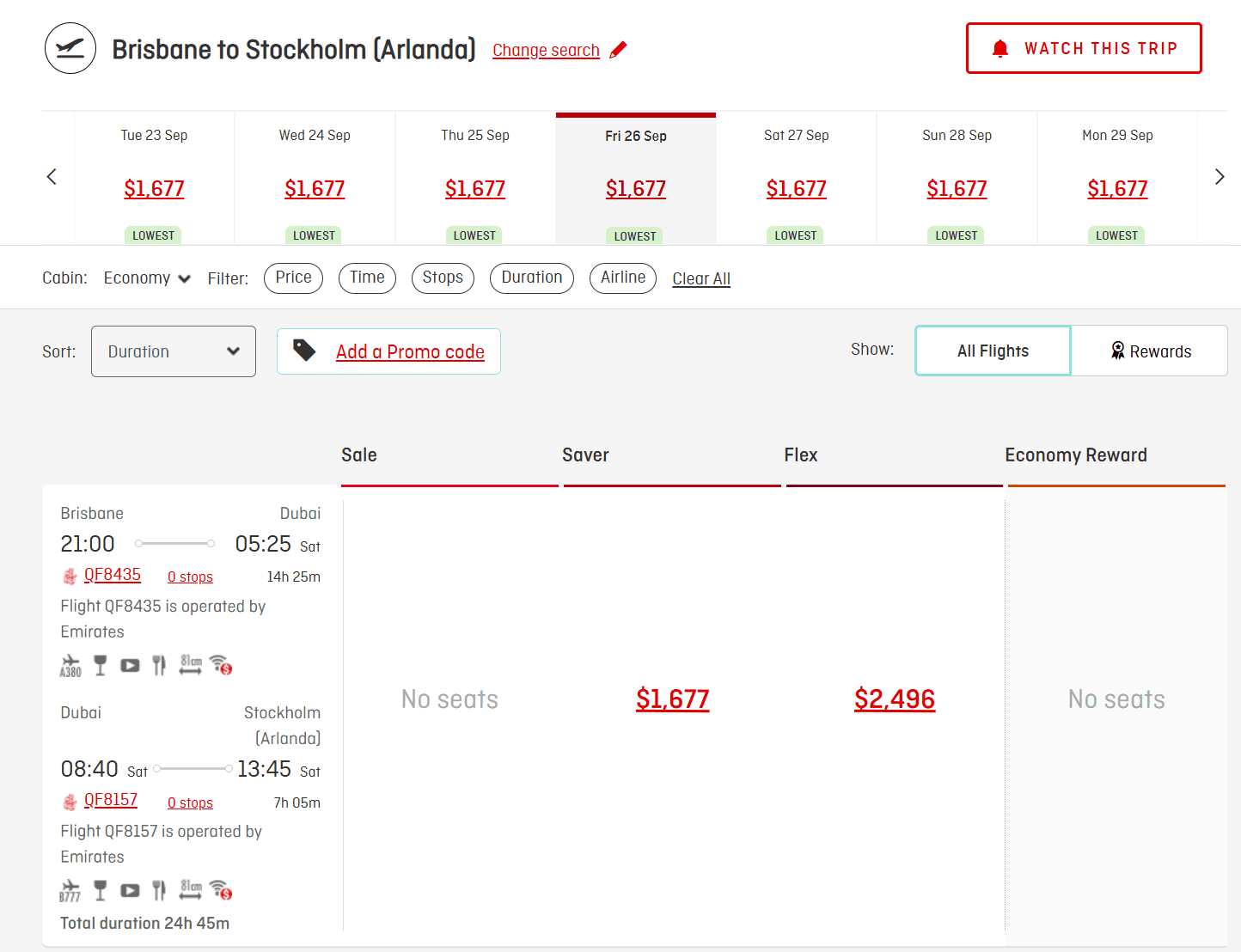
Booking the fight there on it’s own would currently be $1,677

The return flight on it’s own would currently be $1,958 (based on 13,000kr Norwegian converted to AUD)
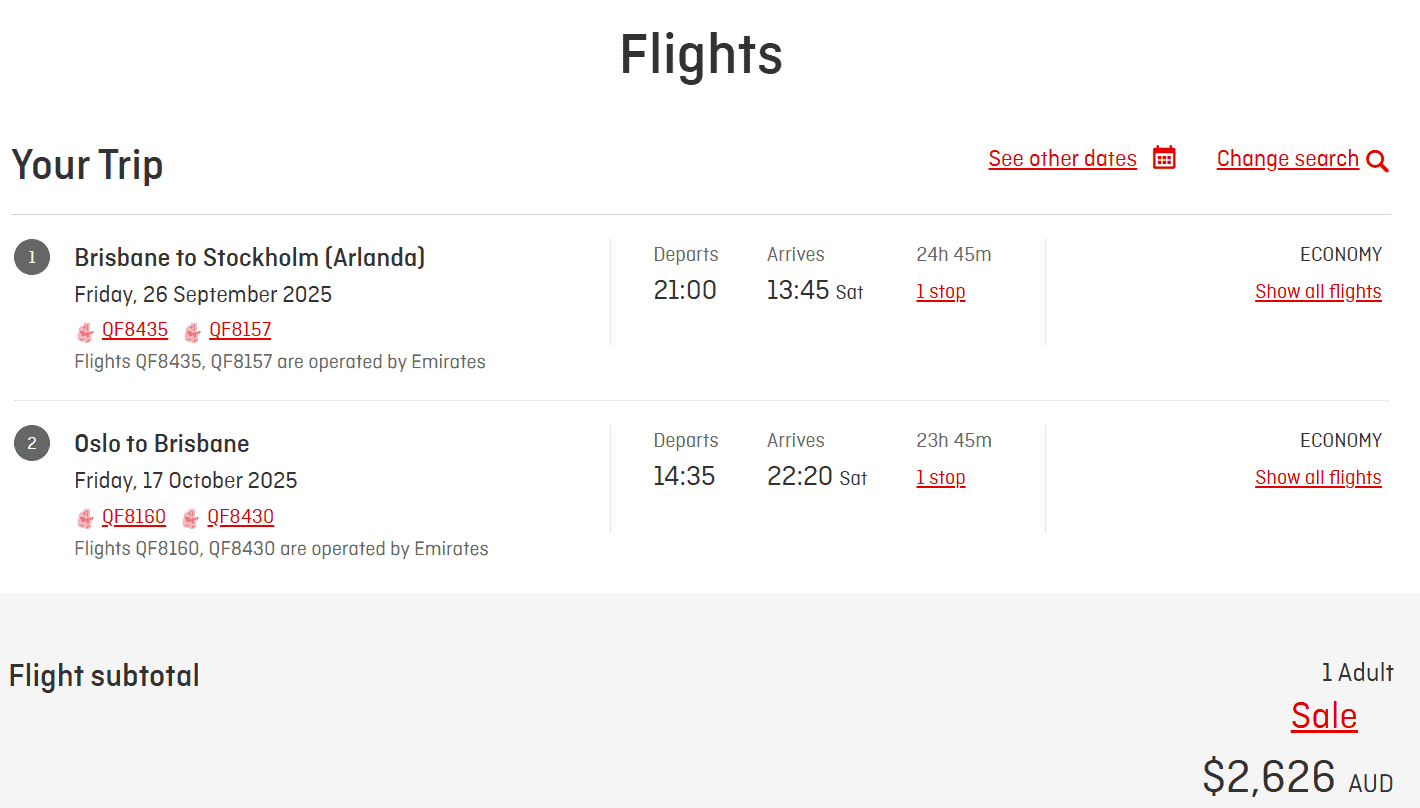
Or I can book the return flight at the same time and pay $2,625 for all of them (so $948 for the return flight) i.e. cheaper
Sometime it’s cheaper to fly one airline there and one airline on the way back. It does take more time to do all of this price and route checking but it can save a lot of money so it’s worth it!
I booked this flight route 3 months ago and the trip is 2 months away. The cost of the flights are basically the same as what I paid 3 months ago. I don’t think these destinations are as popular as the London, Paris, Rome etc. routes as I’ve noticed far more price fluctations for the popular routes.
You could risk it and hope for some airline sales, but I would still just book as soon as you have your dates finalised. Because then you can go ahead and book all your accommodation, internal flights etc. which could also increase in price.
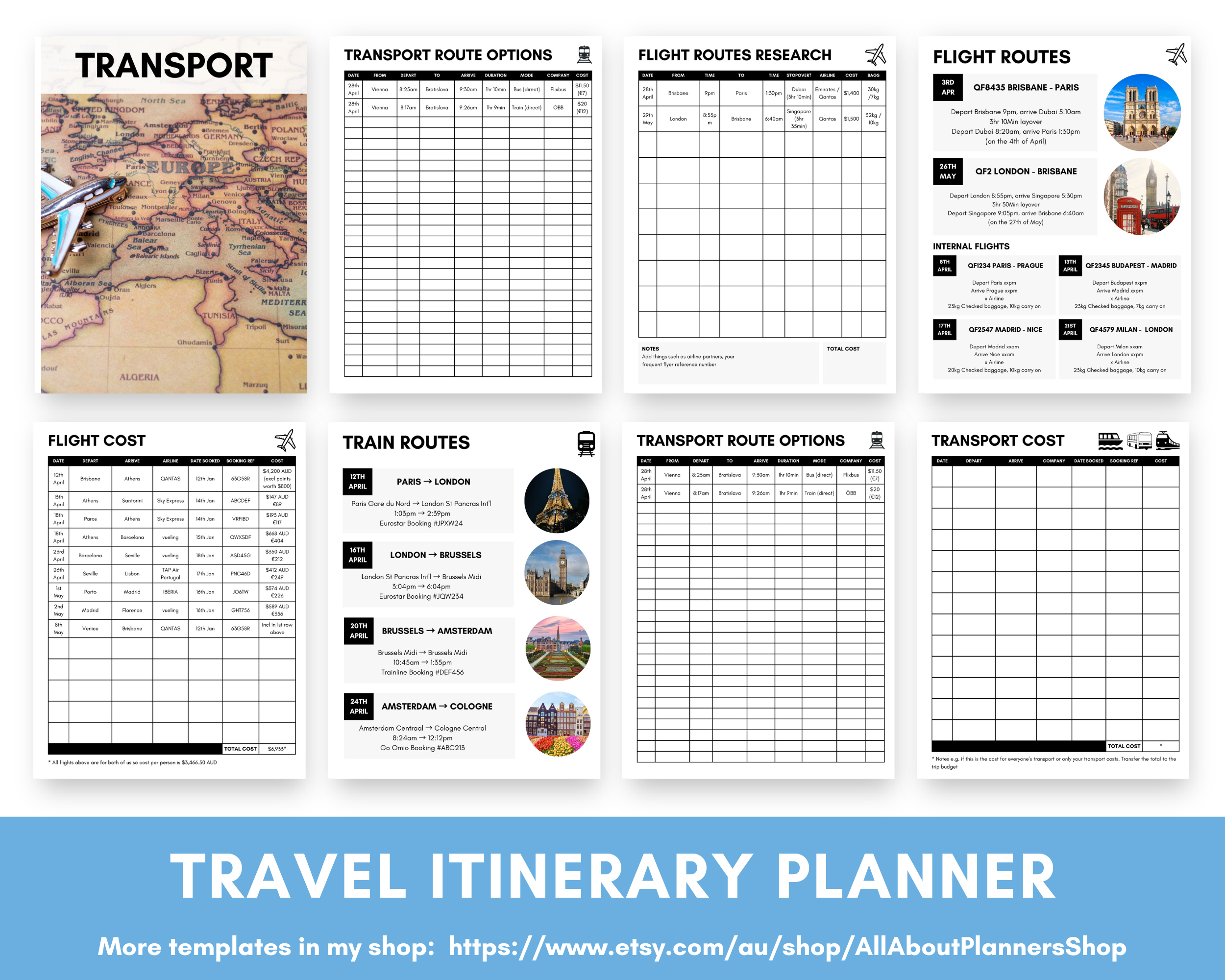
Keep track of your flight route options with my itinerary planner
As for round the world (RTW) tickets, I’ve never tried these. I’m not someone that likes a little ‘taste’ of places when I travel (I don’t think that’s an efficient or budget friendly way to travel). I want to go there, see the things I want to see and not feel like I need to go back again (unless it’s somewhere like Paris of course).
So a stopover in Japan on the way back from the USA for example. I would never do that, no matter how cheap, as I have limited time and there’s enough things for me to see in the USA without trying to fit in a stopover too. A RTW ticket would also require packing for multiple seasons. If time wasn’t an issue then I’d probably be interested in an RTW ticket to save money, but not while I work full time.
Book flights before the end of the month
I’ve been caught out a few times where I didn’t book a flight before the last day of the month, and then the 1st day of the next month, the flight has gone up. For long haul flights this can sometimes be a $200 increase!
Booking connecting flights with different airlines
This is an absolute no-no for me. You’ll have to collect your own luggage, and go through the security checks again.
I’m not sure if this is the case in other countries, but sometimes if you’re connecting, airlines can put you on earlier flights if you’re ahead of schedule and there are seats available. I’ve been able to do this with Qantas on two occasions when transferring from an international flight to a domestic flight (and the change was free of charge).
Stay loyal to one airline
I live in Australia. The main airlines we have are Qantas and Virgin. I often fly Qantas as they are a partner airline with Emirates and many flights to Europe go via Dubai. I used to go via Singapore on Singapore Airlines (which partners with Virgin), but Singapore Airlines has really increased the flight cost in recent years, so now I always fly via Emirates.
By always booking through Qantas on their co-chair with Emirates flights, I was able to move up a status rank with Qantas which is honored by Emirates and other airlines that are part of the One World Alliance. I don’t want this for the lounge access, I want this for the luggage allowance. I travel with a small laptop and the weight of it plus a wheel carry on bag is almost 7kg already. If you’re a higher member status you have a higher luggage allowance. You can sometimes also get free seat selection and board the plane first (so no fighting for space in the overhead). I’ve also found I’m less likely to have my seat moved than when I was on the lowest membership status.
At the time of writing this post, these are the alliances:
One World
Alaska Air, American Airlines, British Airways, Cathay Pacific, Finnair, Iberia, Japan Airlines, Malaysia Airlines, Qantas, Qatar, Royal Air Maroc, Royal Jordanian, SriLankan Airlines

Star Alliance
A list of code share and member airlines is on this page of the Star Alliance website.
SkyTeam
Aerolineas Argentinos, AeroMexico, AirEuropa, AirFrance, China Airlines, China Eastern, Czech Airlines, Delta, Garuda Indonesia, ITA Airways, Kenya Airways, KLM, Korean Air, MEA, Saudia, TAROM, Vietname Airlines, Virgin Atlantic, XiamenAir

Use a points earning credit card to book domestic flights
Again, an obvious one. Points earning credit cards used to be worthwhile but now they’re quite stingy (at least that’s the case in Australia). Another option is a credit card through a bank, which usually has a minimum spend for the first 30 days in order to receive bonus points. These bonus points can then be transferred to frequent flyer points or gift cards (which I then use for buying groceries). So that’s the next best thing to a cashback offer.
Make sure you apply for a new credit card weeks in advance so you have it by the time you’re ready to book your flights.
Use a pre-paid card for international flights
I was recently booking flights on the KLM website where it gave me the option to pay in Australian dollars. I wondered if there would be a credit card surcharge and unfortunately there was. I should’ve stuck to my usual approach which is book the overseas flights via my Revolut card. I can load Australian dollars, transfer it into the currency I need and when I go to pay, the website will automatically use the local currency first. There are no fees to exchange currencies and the exchange rate is basically the same as the official rate (not sponsored, have just used it for years and really like it). Wise is another option.
Should you use points to pay?
Check the best use of points. I’ve found it’s better value to use the points on a long haul flight than a domestic flight.
You never know when an airline is going to ‘revamp’ their frequent flyer program and change the value of any accumulated points, so I try and use them pretty much as soon as I accumulate them.
Be aware of sneaky charges. For example, if you book flights on the Qantas website using points then they force you to pay the rest via card which incurs a surcharge. If you don’t use points then you can pay via BPAY which does not incur a surcharge.
Seat selection
I don’t care how expensive the flights were, I will always pay extra for seat selection if it’s an option. I almost always travel with my Mum who prefers the aisle and I prefer the window. So by booking our seats together (book them on the one ticket to avoid being moved), we have a higher chance of having that middle seat free.
I always want the best view I can get and prefer to sit at the back of the plane so the wing isn’t in my photos. I always google the seat map of the plane e.g. boeing-747 to check that I’m not booking a seat over the wing, or right next to the bathroom and galley (where the lights will keep me awake).
I also always google the best side of the plane to sit for a view of <insert famous landmark at the destination you’re traveling to> e.g. Best side of the plane for a view of the Burj Kalifa. The below photo took me flying via Dubai on 4 separate occasions. Plan the best you can, but a lot of it is luck!


Seat Guru is helpful for choosing the best seats for different types of aircraft
I also go onto FlightRadar24 which is a free website (or you can use the app), to see which direction planes typically land and depart from at each airport. You can literally go on there at the time you would be arriving or departing, find the equivalent flight number that you will be taking, and watch which direction it takes off or lands. Or you can just go on there at any time of day and look at which direction other flights are landing and departing via. It’s not always right as wind direction can change the flight paths but it’s an educated guess.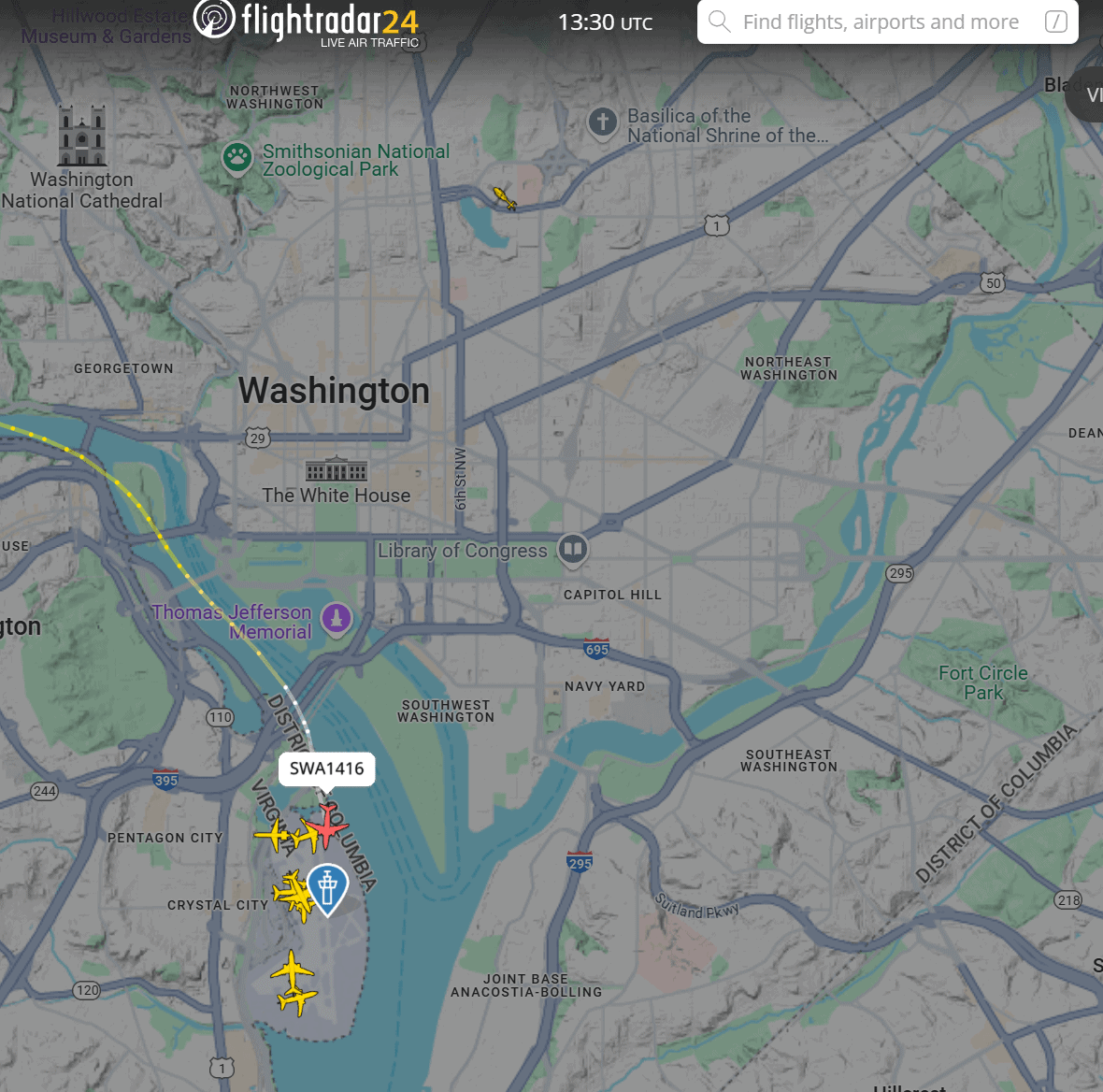
You can click on a plane and see where it’s traveled from and the route flown. Based on the above, I would sit on the left side of the plane landing in Washington DC
What is the baggage allowance?
Most airlines allow 7kg of carry on. If you have a loyalty membership with them, this may increase to 10kg depending on your membership tier. Be careful to check the bag weight. I booked a flight to Dubai with Qantas on a flight that was code-share with Emirates. Qantas’ luggage allowance is 10kg carry on. I had a carry on bag that was 10kg and a checked bag that was 19kg (the limit for checked luggage is usually 32kg).
I got to the check in counter in Brisbane and a really rude lady said to me ‘Emirates plane, Emirates rules’ and made me go and move things between the bags so that the carry on bag was 7kg. I then had to re-join the very end of the queue for bag drop. I even showed her my booking confirmation where it said my baggage allowance was 10kg. For goodness sake, it’s all going on the same plane and as long as I can lift the bag into the overhead myself, does it really matter which bag the weight goes into? In contrast after I’d queue the second time I ended up with a different staff member at the check in counter, and they didn’t care about weighing carry on bags at all.
Luggage allowances are listed on the airline websites but always check the booking confirmation / ticket.

What class should you travel in?
I’ve only ever flown in cattle class (economy). I nearly booked premium economy one time (back in the day where bidding a few hundred dollars a few days before the flight would usually secure an upgrade to premium), but decided against it. The more I’ve researched the differences between economy and premium economy, the included extras versus the extra cost don’t seem worth it to me (extra baggage allowance, larger seat, slightly better food, board and disembark the plane slightly earlier).
Tip: weekday flights are way more quiet than weekends. I flew back from Europe on a Wednesday once, had an entire row to myself! Premium economy was full with no spare seats so I actually ended up with more room than them 🙂
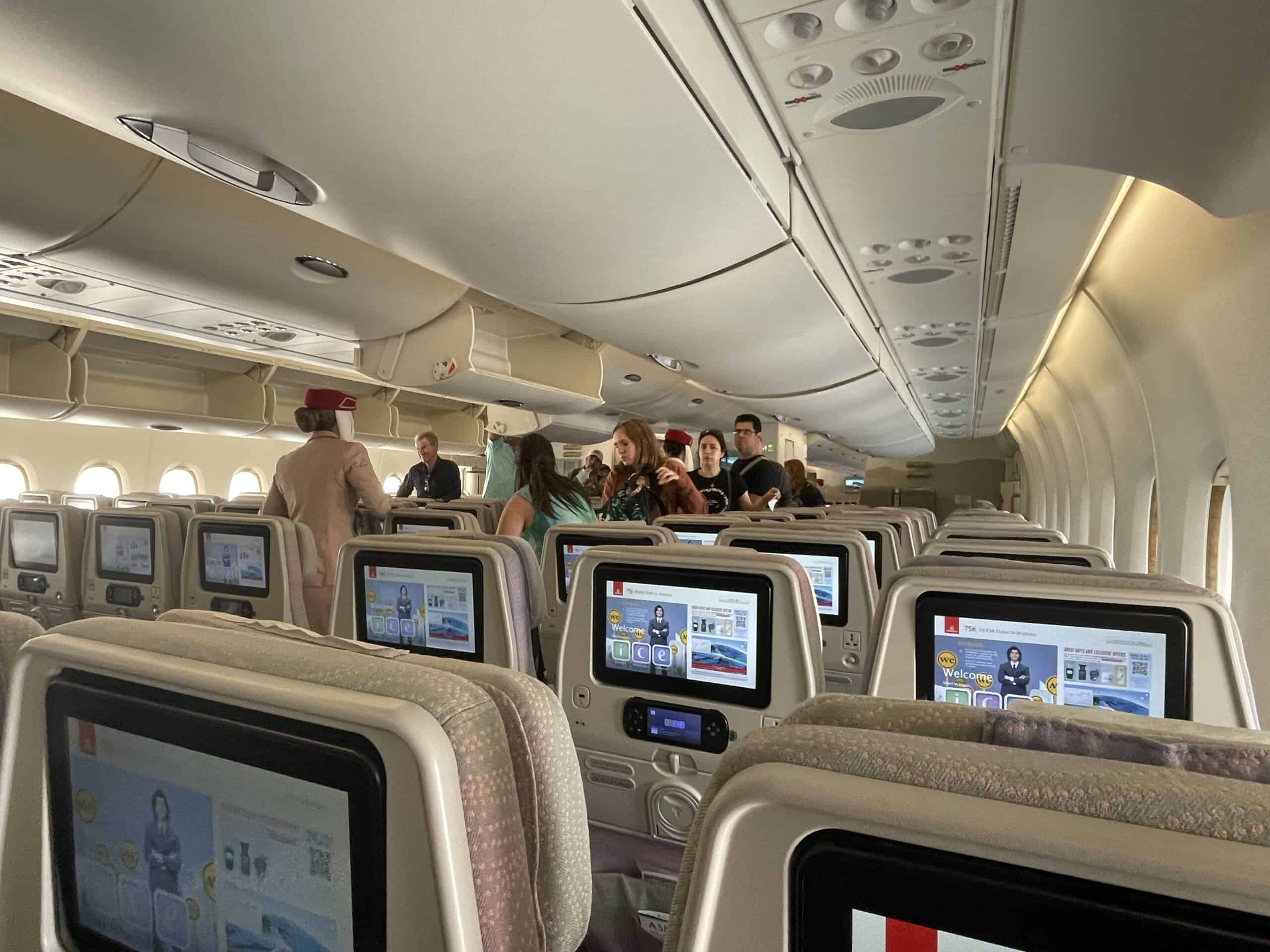
Within economy class, some airlines have different types of fares like a ‘saver’ or a ‘flex’ fare. The main difference is the checked baggage allowance and free versus paid seat selection.
If you purchase the cheaper / base fare you can usually add checked baggage after booking or pay a fee at the airport. But since I’m always going for a long period of time and can’t fit everything into only a carry on bag, I can’t say whether it ends up costing more to add the checked bag later on.
Taking the vueling website for example, I can see that for a flight from Porto to Madrid it costs 34 euro extra to get a checked bag at the time of booking:

When I go to their ‘Additional flight services charges’ page, it only gives a generic price range depending on the weight of the checked bag (from 14 euro to 120 euro).

What happens if an airline goes bust?
This happened to me when I was in Europe, a few weeks before I was due to visit Slovenia and had booked with their national airline Adria airways. This was quite a few years ago now and one of the few times I had actually used a travel agent to book the flights. There was a refund form but it was all in another language.
The travel agent filled out the form for me, got me a refund, and booked me on the next flight option before it sold out (charged me the same price as if I had booked the alternate flight myself too). The only good experience I’ve had with a travel agent!
— Airline recommendations —
My favorite airlines
- Qantas
- Singapore Airlines
- Air New Zealand
- Alaska Airlines
- United Airlines
- American Airlines
- Emirates (because they partner with Qantas so I can use points and get cheaper flights to Europe). But I must admit they are almost always early when I land in Dubai, I’ve never arrived late on an Emirates flight
Airlines I avoid
- Air Baltic – read about why in this post
- Any budget airlines for long haul flights. Yes you might save money on the flight cost, but the excess baggage costs quickly add up. If it’s a long haul flight I want a real meal, not snack food. The seats can be quite close together too.
- Air Canada – When I flew with them we sat on the tarmac for 2 hours while they fixed a mechanical issue. They did not make up the time in the air (and didn’t really genuinely apologise either), so a 14hr flight turned into a 16 hour flight. The seats feel far more cramped than other airlines that fly long haul

Airlines that get a bad wrap
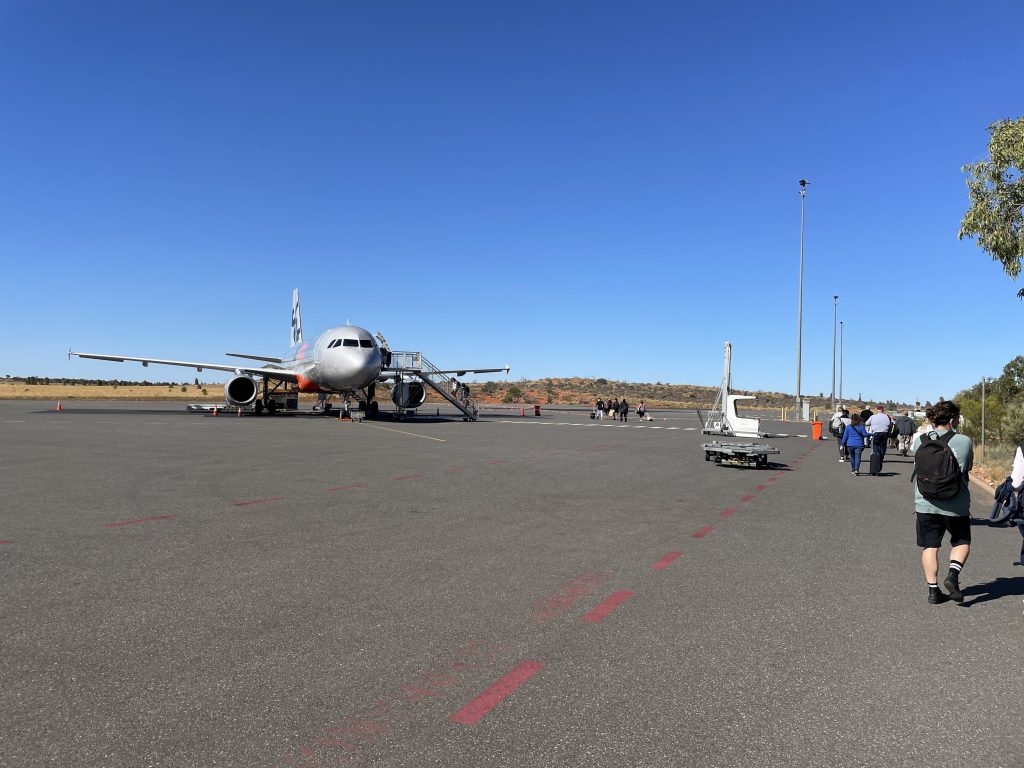
- Jetstar – I’ve always had good service when I’ve flown with them. The pricing is transparent and it’s cheaper so you can just pay for say 15kg of checked luggage on a domestic flight, instead of 20-23kg which is the default for most airlines. Highly recommend for flights to and from Australian capital cities as many of the flights leave at similar times to the more expensive Qantas and Virgin anyway
4 Day Itinerary in the Red Centre, Australia (Ayers Rock, The Olgas and Kings Canyon)
Safety rating & reliability
I won’t book an airline that has a history of crashes and a questionable safety rating. Sorry Malaysia Airlines…
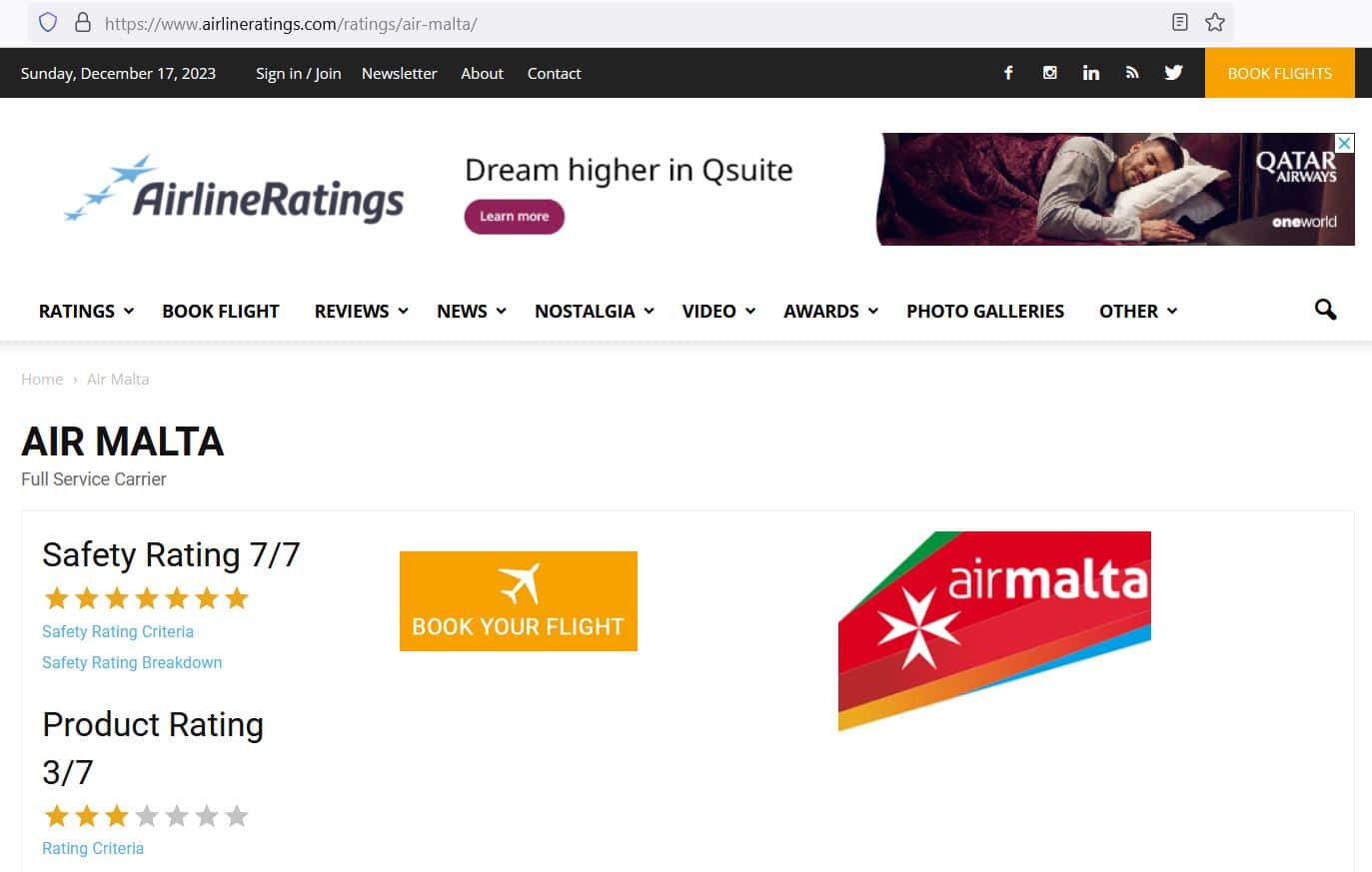
Because I live in Australia, I don’t regularly fly with all of the European airlines (I try and avoid too many internal flights when I visit Europe, in favour of trains and buses instead). So I always google the safety rating of every airline that comes up in search results, before I go ahead and book with them. I like the AirlineRatings website, as it also provides a safety and product rating.
Online forums are also helpful for this too, especially if you want to know how rigid an airline is with their baggage allowance limits.
Summary
I know a lot of these tips were specific to Australian’s traveling abroad on long haul flights but I hope if you live elsewhere in the world, that some of these tips were helpful!
More travel planning posts
- 50 Things to consider when planning an itinerary
- How to choose a hotel (my step by step process)
- How I use Microsoft Word to plan my travel itinerary (my template & planning process)
- 115 Things to Google before your next vacation
- How to Efficiently Plan a Month-Long European Itinerary in Just One Week
Liked this post? Pin it!