This is how many bullet journal notebooks you actually need
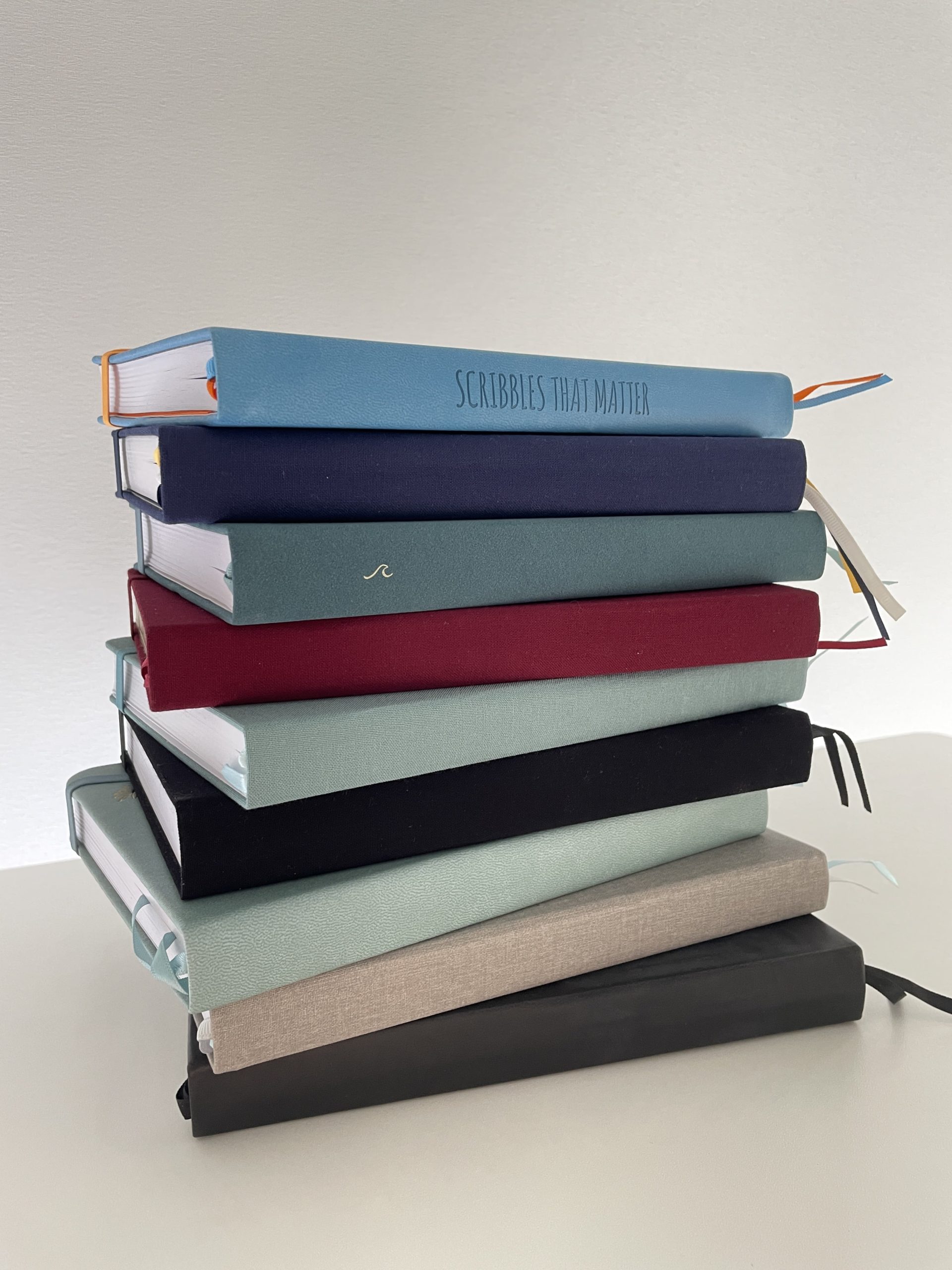
I have over 70 bullet journal notebooks. Why so many? Well many I purchased to review here on the blog (see all of my reviews here), but I also purchased many to test the paper quality. So what do I do with all of those notebooks, and how many dot grid notebooks do you actually need?
I do have quite a few empty notebooks that are waiting to be used, but it’s probably also worth mentioning that I use them for sketching up designs for my printables shop so the average person certainly won’t need as many notebooks as I have.
So how many bullet journal notebooks does the average person actually need per year?
This is going to be different for everyone but I think you need 3 to 4 notebooks that you use at the same time:
- Draft notebook
- Planning notebook
- Lists notebook
- Hobbies, collections and specific goals
Let’s go into more detail for each!
1. Draft notebook
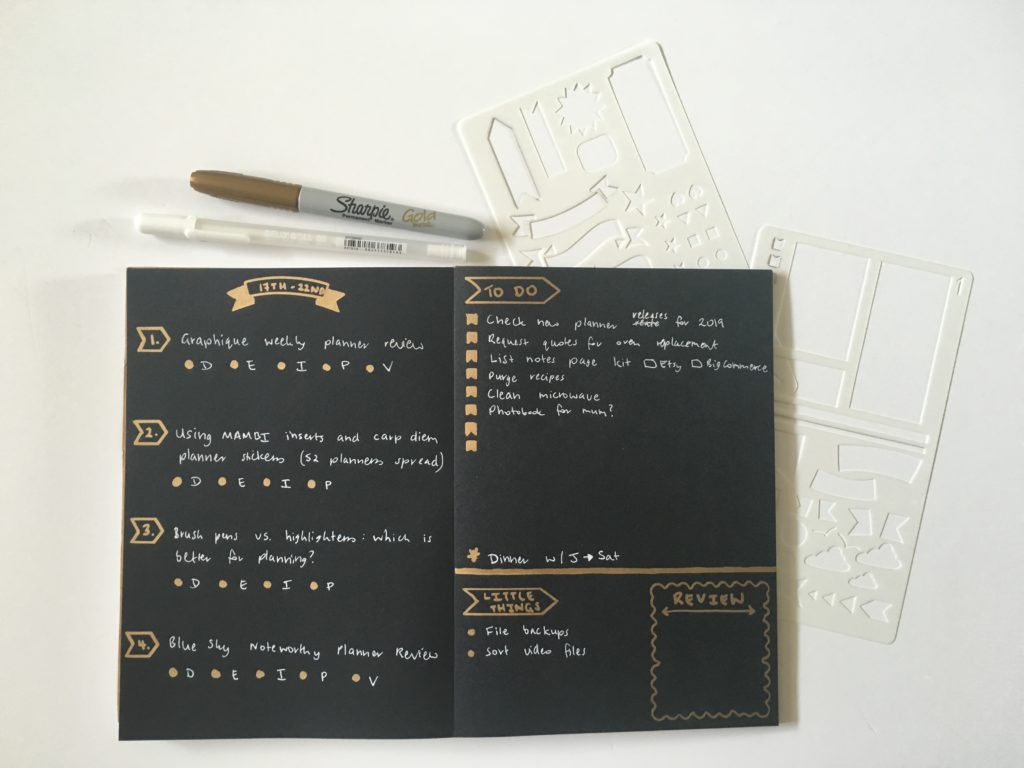
Ever wanted to experiment with different spreads but afraid you’d make a mistake and ‘ruin’ your bullet journal notebook? What about testing different pens and how much they bleed through the page?
Those are the type of things that are perfect for a draft notebook. I can’t stand having scrap pieces of paper with scribbles lying around. If I organize my bullet journal spread ideas into a notebook then I’m inclined to be neater too, as the page isn’t just going to get lost or thrown away. Plus it keeps all my ideas secure so I can easily find them again.
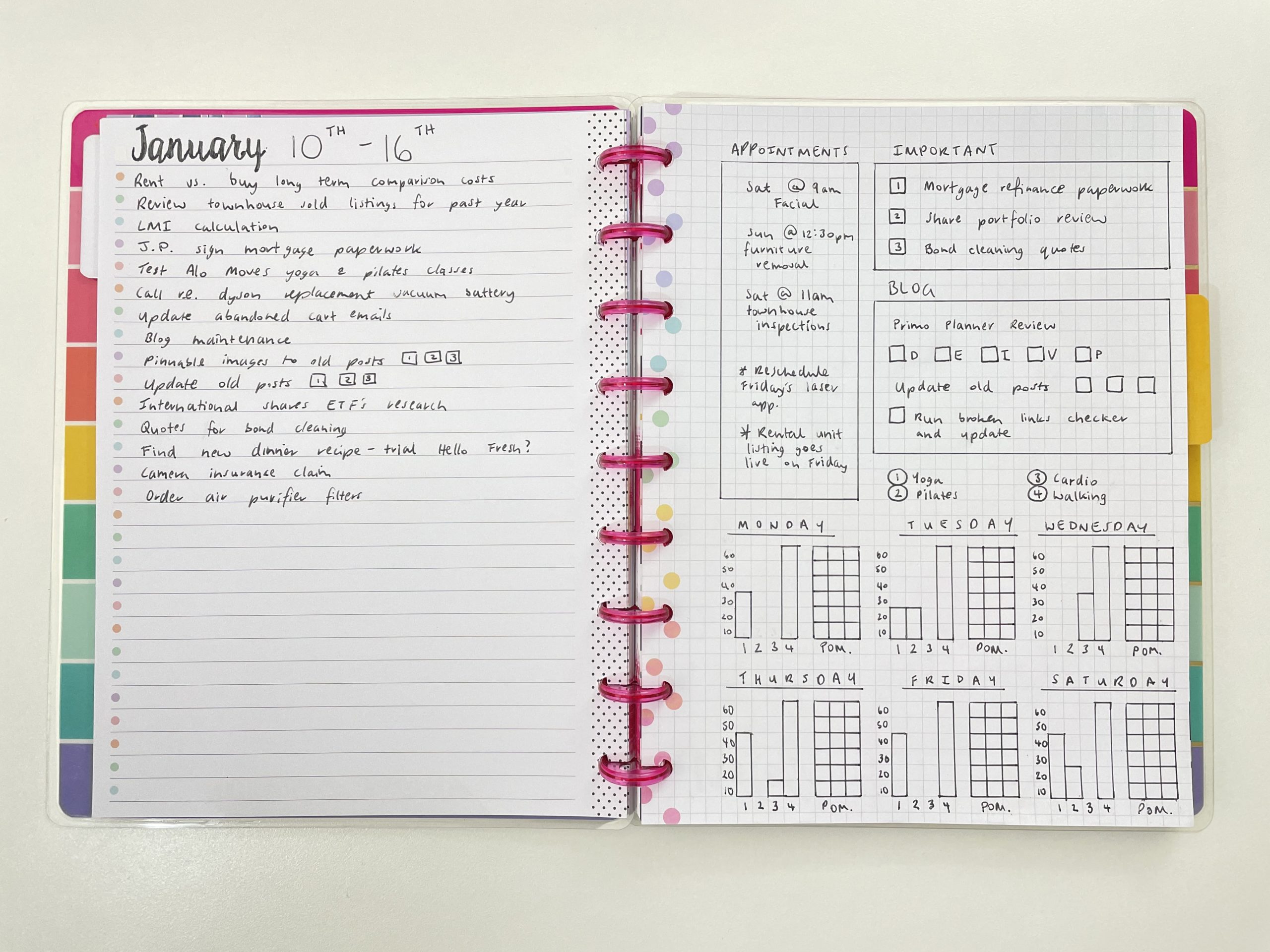
The layouts that you see in these blog posts were all done in my draft bullet journal notebooks:
- 20 Bullet Journal Weekly Spread Ideas (One Page Layouts)
- 10 Quick and Simple Bullet Journal Daily Layouts
- 26 Non-typical 2 page weekly spreads to try
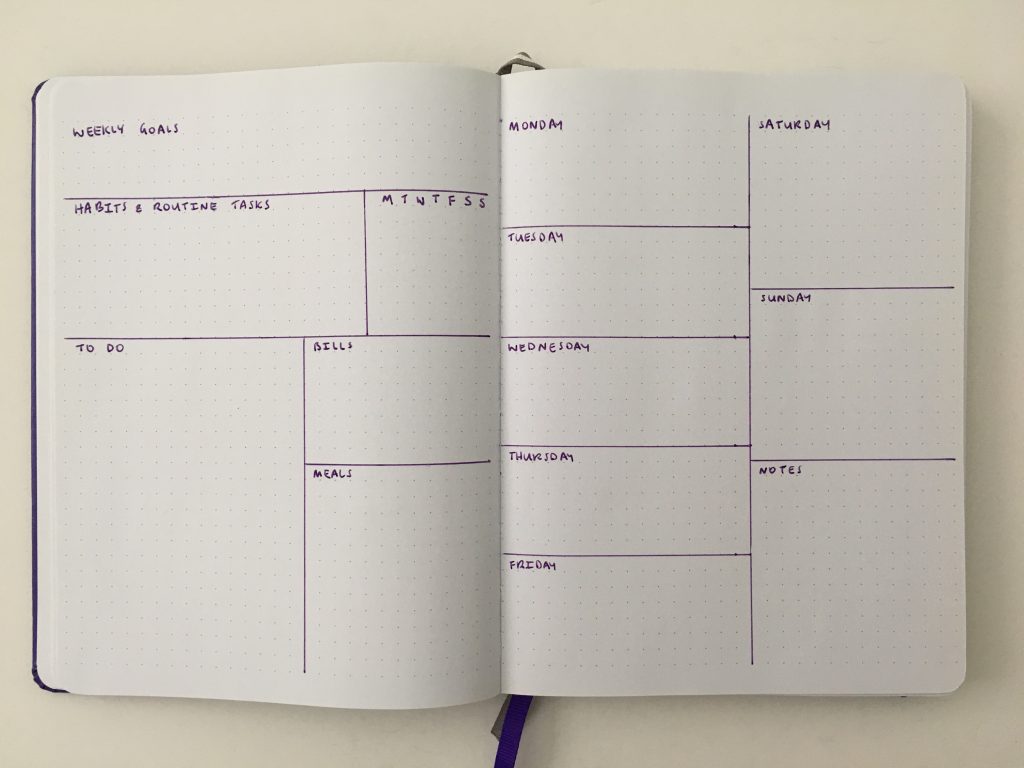
This is a good way to use up cheap notebooks that don’t have the best paper quality (80 – 100GSM) such as:
- Clever fox
- Artfan
- Minimalism Art
- Rettacy
- Paperage
- Otto (from Officeworks)
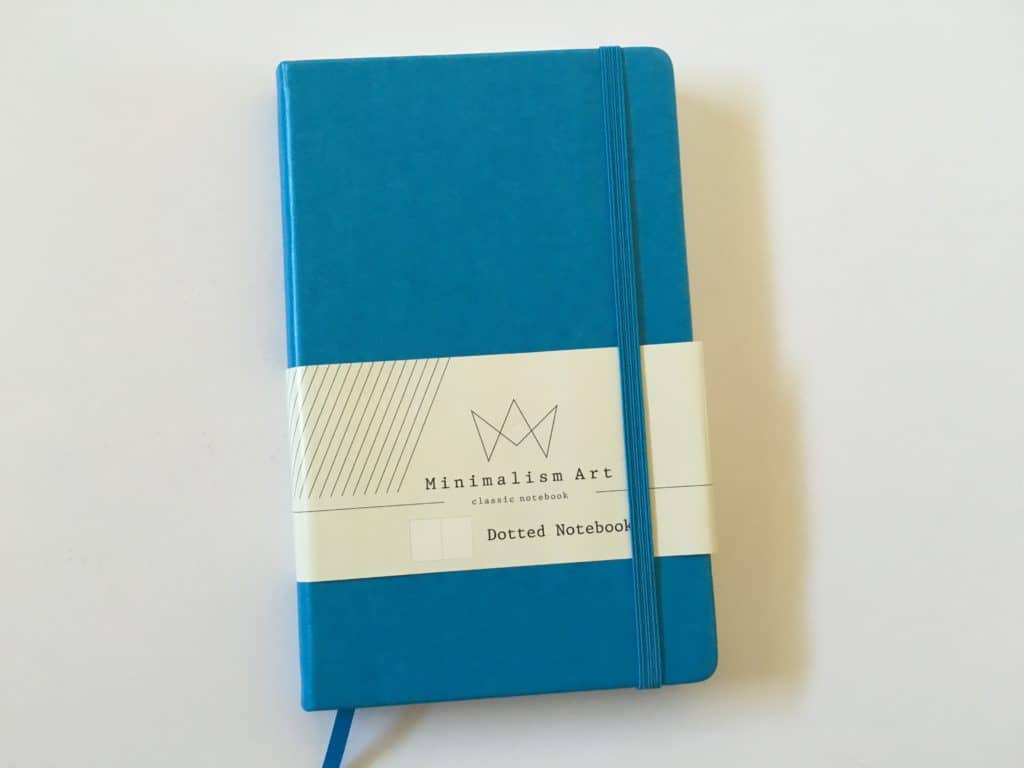
Minimalism Art Dot Grid Notebook for Bullet Journaling
If you want your draft spreads to be ‘accurate’, count the number of dots per page in the main bullet journal notebook you use, then try to find a cheaper dot grid notebook with the same or similar dot count. I always count the number of dots on the page horizontally and vertically, write it on a sticky note and place it on the inside cover of the notebook.
I include those dot counts in my bullet journal notebook comparison. Make sure you check out that comparison before buying your next notebook!
2. Planning Notebook
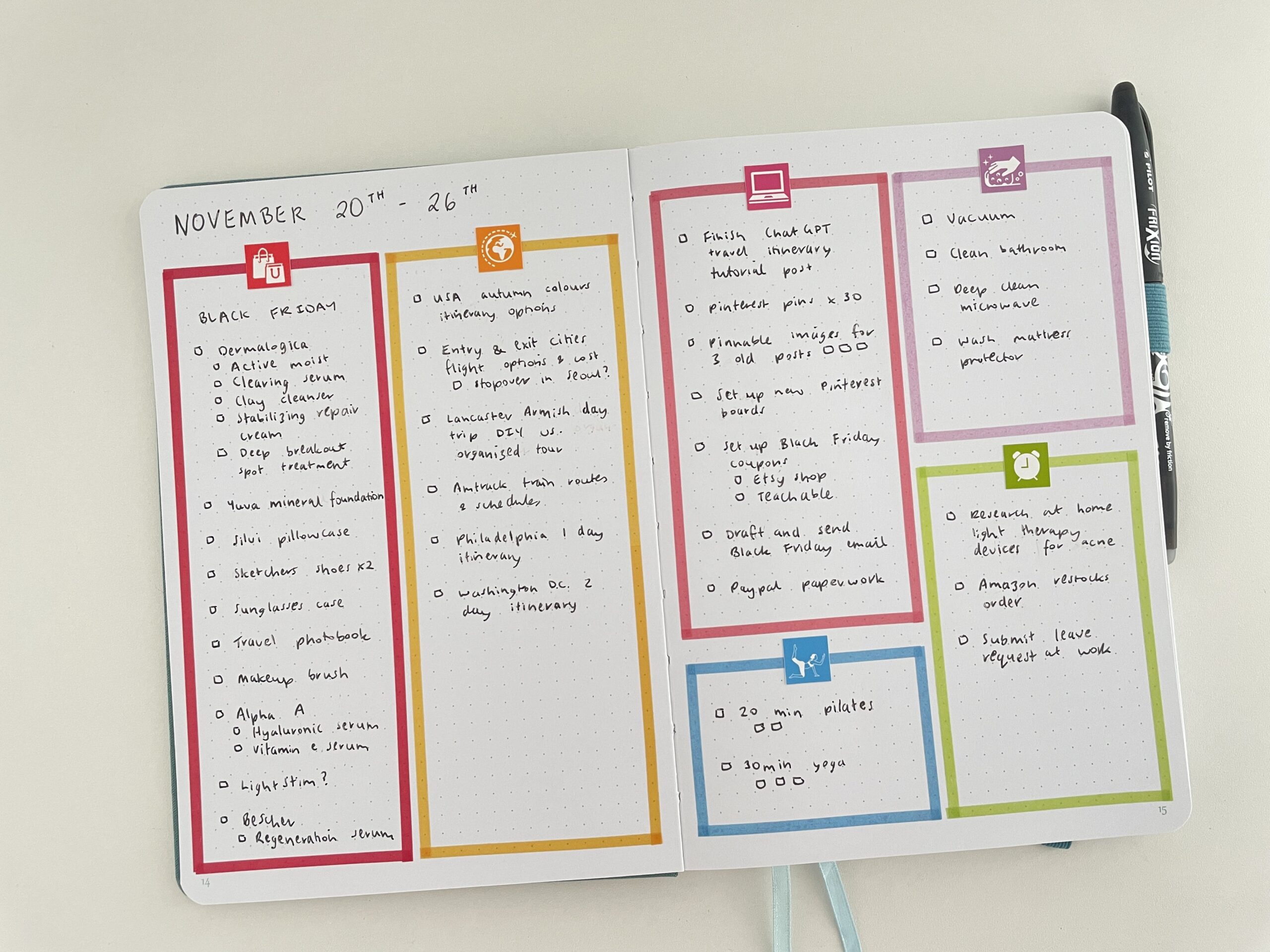
This is where you’ll actually plan your days, weeks and months. This is the notebook where you can use your stickers, washi tape etc. and decorate the pages to your liking.
For this notebook I recommend high quality 160 GSM paper so you can use practically any pen, marker pen, highlighters, stamps etc. and not worry about them bleeding through the page. Thicker paper with no ghosting (for most brands, more on that below), also means you’re more likely to write on both sides of the page.
In rare instances, some of the 160 GSM notebooks I’ve tried have had a little bit of ghosting. I did a detailed comparison and pen test in this post: comparison of Dot Grid Notebooks for Bullet Journaling with 160 GSM paper (Thick, bleedproof paper)
Some of my favorite dot grid notebooks with 160 GSM paper:
3. Lists notebook
If you want to write down your plans for everything you’ll inevitably end up with pages of lists for anything and everything from favorite recipes, to movies to watch, tasks for a project your working on, shopping lists etc.
It will be very frustrating (even with page numbers) to be forever flicking back and forth between your planning pages and your lists.
You’ll probably fill your notebook before you finish completing your lists as well. You wouldn’t want to be lugging around a full notebook just because you need to refer back to a few pages of unfinished lists.
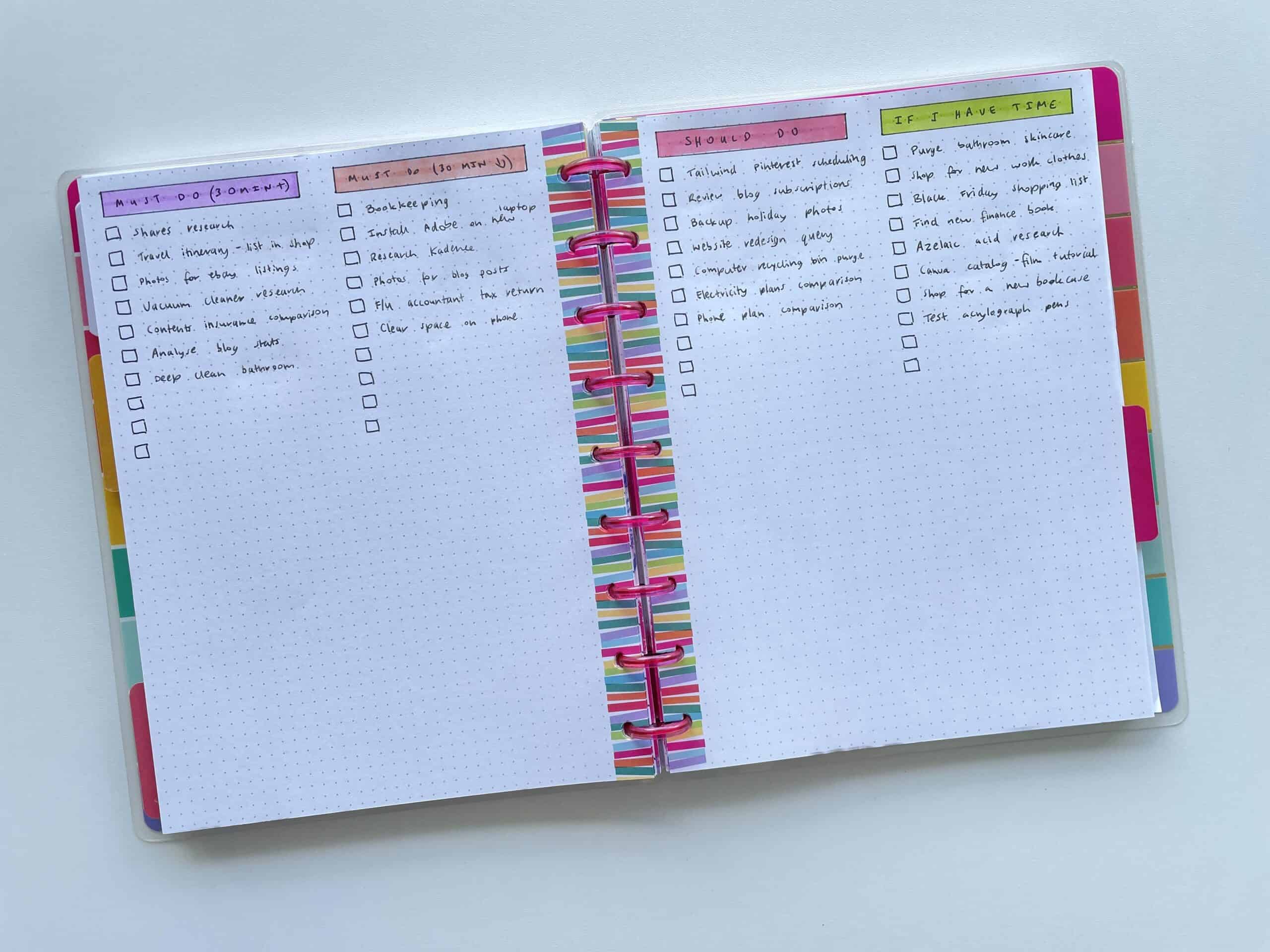
It’s easier to have a separate ‘brain dump’ notebook open at the same time as your planning notebook. Then you can refer to the brain dump notebook when choosing what tasks to add to your daily, weekly or monthly spreads. So for those reasons, it’s very helpful to keep an entirely separate notebook just for lists.
If you have a lot of lists you may even choose to use 2 notebooks. One with disc binding or perforated pages for things like shopping lists, and another with non-perforated pages for reference lists like car maintenance checklists and seasonal cleaning checklists that you only need to refer back to occasionally.
I used to keep master lists in notebooks, but switched to a spreadsheet a few years ago. You can download my master tasks spreadsheet for free in this post
This is another notebook that can get very messy with scribbled out tasks, highlighters for color coding etc. I would use a mid range notebook for this (120 – 140 GSM).
Some mid range notebooks I recommend are:

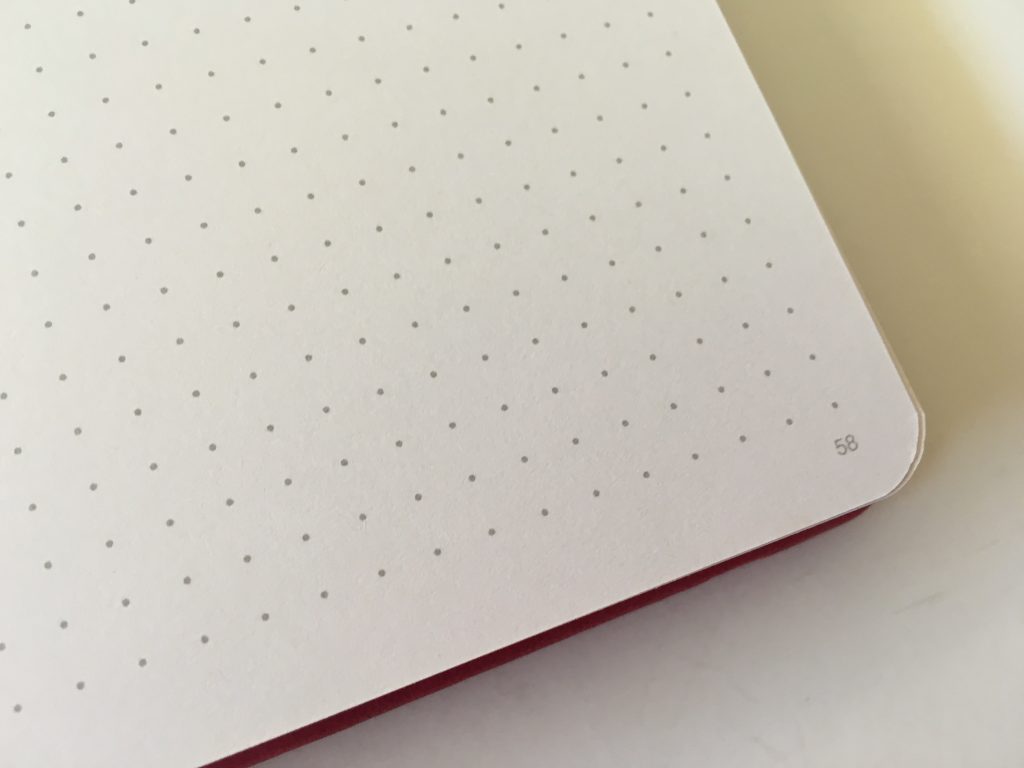
Page numbers are a must have for a lists notebook!
4. Hobbies, collections and specific goals
Depending on how detailed you like to plan, you may or may not need this 4th type of notebook.
If you’re regularly running out of space on your weekly spread, then consider a separate notebook for tracking things like:
- Fitness
- Meal planning
- Project planning
- Meeting minutes of any clubs you’re apart of
- Budgeting
- Travel planning
- Social media content planning
- Scrapbooking & memory keeping
- Recipes
How many notebooks do you need per year?
Depends on many things:
- Do you plan your days in detail, or is a weekly spread sufficient?
- How many pages do you use per spread (do you just use 1 page per spread, or 4?)
- Do you like to do monthly reviews?
- Are you trying to keep your lists in the same notebook as your planning book?
- Do you write on both sides of the page?
- What page size do you want to use?
- How big is your handwriting?
- Do you write on every line of the grid, or every second line?
- How decorative are your spreads? (do you do functional planning only, or is approx. 30% of the page used for stickers, washi tape and other decorations)
- Are you planning work, personal and family things all in one notebook?
- Do you take your notebook with you everywhere? If so, which pages do you refer to the most frequently when you’re out and about?
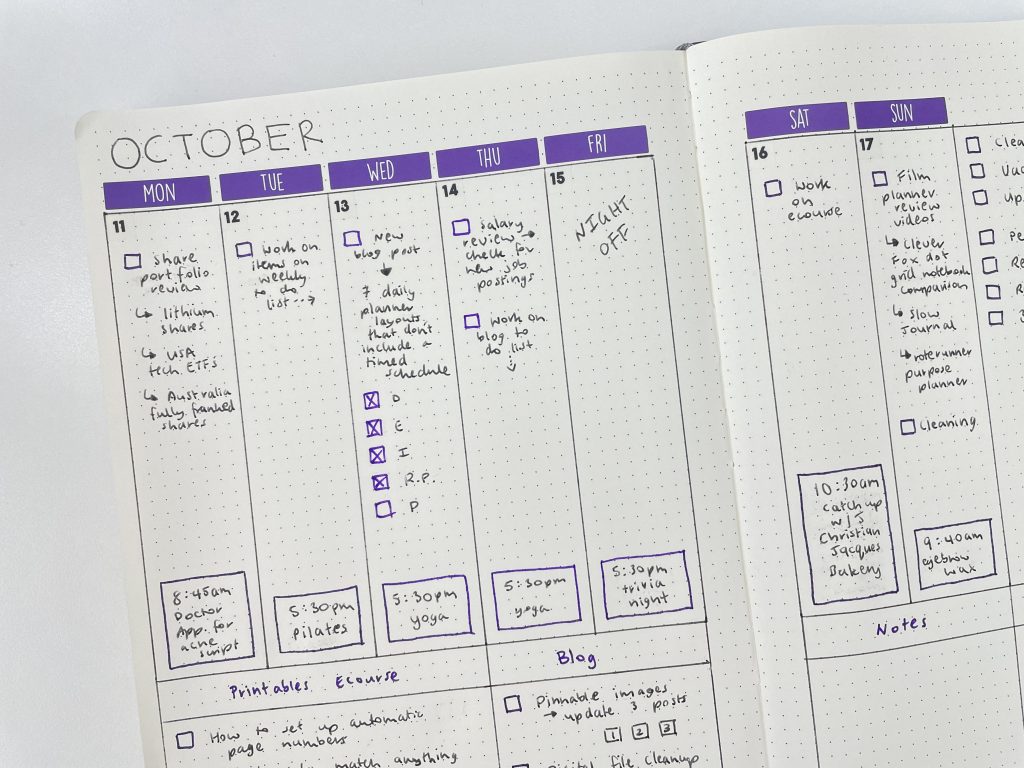
There are usually 200 pages in a typical dot grid notebook. Here’s an example of how you might use those 200 pages:
- Annual planning = 4 pages
- Monthly cover divider pages = 12
- 52 weeks x 2 pages per week = 104 pages
- Contents page = 4
- Monthly planning = 12
- Monthly calendar x 2 page spread per month = 24
- Monthly habit tracker = 12
- Monthly review = 12 pages
- Annual review = 4 pages
- Goal / project planning = 10 pages
Total pages used = 198
You can see there’s no room left for lists! And what about handy reference lists you only refer back to a few times per year like a car maintenance checklist? These will not fit and should not be in your main bullet journal notebook.
I would move those types of pages out and keep them in their own notebook, or better yet, use a discbound notebook.
Related post: Guide to Discbound Planners & Frequently Asked Questions

You could probably go through 3-4 notebooks per year if you exclusively use 1 bullet journal notebook to plan your entire life (daily planning, meal planning, fitness, budgeting, college etc.)
If you like to do daily planning, there’ll be a huge difference between allocating 1 page per day versus drawing a line on the page wherever you end up, and continuing on that same page with the next day’s plans.
How many pages in a standard dot grid notebook?
There’s no such thing as a standard dot grid notebook! Every brand has a different take on the classic notebook. Really the only thing that is standardized is that most brands do a 5mm dot grid.
Thinner page thickness (e.g. 100 GSM) can usually squeeze more pages in. The Leuchtturm1917 has approx. 251 pages. By comparison, Archer and Olive which has 160 GSM paper (among the thickest paper you can get) – only has 160 pages.
If you can find a notebook for $10 – $15 where you write on every second page because of thin paper, this could end up working out slightly cheaper than buying one 160 GSM notebook.

If you’re not sure how many bullet journal notebooks you need, I’d start with 2:
- One notebook for your day to day planning (nicer notebook)
- Second notebook for lists and everything else (cheap notebook)
You can always buy more bullet journal notebooks later on.
If you can’t decide what bullet journal notebook is right for you, download my comparison here.
Read this post next: How to choose the right bullet journal notebook for you (10 things to check)

More bullet journal tips
- 10 ways to save money when buying planner supplies
- 7 Quick & Easy Ways to Personalise Your Planner
- 10 Tips for using stencils in your bullet journal
Bullet journal spread ideas
- 12 Planner Layout Ideas for Monthly Habit Tracking in Your Bullet Journal
- 10 Bullet Journal Daily Scheduling Layout Ideas
- 12 Bullet Journal Monthly Calendar Spreads
Liked this post? Pin it!